A buyer who closes on a Punta Cacique resale picks up more than the keys. Under Costa Rica's Impuesto Solidario, the tax most people call the luxury home tax, Article 7 of Ley 8683 makes jointly liable for the tax of the fiscal period that was running when they bought, plus interest. Under Articles 8 and 9, the tax accrues on January 1 each year, and payment is due within 15 calendar days of that date. A closing set for this high season will fall in or near the January window, so the tax status of the home belongs in diligence along with title and survey.
Buyers who expect a small figure are often surprised by the size of the bill. The test that decides whether a home is taxed looks only at the building. The bill itself covers the building, the land under it and, in a condominium, a share of the shared amenities. For the branded residences and estate homes being delivered around the Waldorf Astoria at Punta Cacique, those last two items can account for much of the total.
A threshold measured on the house alone
The Ley 8683 text exempts homes whose fiscal construction value, including fixed and permanent installations, is at or below an annually adjusted amount. The tax reaches homes used habitually, occasionally or for recreation. That covers a second home that sits empty for half the year.
For fiscal 2026 the line is ₡143 million. Decree 45358-H, published in La Gaceta on December 19, 2025, applied a consumer price change of −1.31% to the previous ₡145 million figure and rounded the result to the nearest million. At the Banco Central de Costa Rica's November 7, 2026 sell rate of ₡452.13 per dollar, the threshold works out to roughly $316,000 of construction value. Fiscal value is calculated with Hacienda's unit-value manual, not from the purchase price. Even so, a finished ocean-view home or a branded condominium at the level of finish Punta Cacique is building to will cross that line easily.
Then the land comes back in
Once the construction value passes the threshold, the taxable base becomes the fiscal value of the whole residential property. The law values construction with the manual and values land with Hacienda's land valuation models. La Nación's 2025 explainer set out the practical effect. The rates apply to the full value of construction and land together, and the exempt amount is not subtracted first. In the same article, a property with a total value of ₡215 million paid 0.25%, or ₡537,500.
On a coastal headland this is the key point. A house just over the construction line can sit on land valued well above the house, and every colón of that land value joins the base. The scale is progressive, so a larger base reaches higher brackets. These are the 2026 brackets under Decree 45358-H, with dollar figures converted at the November 7 BCCR sell rate and rounded:
| Portion of fiscal value | Approx. USD | Rate on that portion |
|---|---|---|
| Up to ₡359 million | up to $794,000 | 0.25% |
| ₡359 million to ₡720 million | $794,000 to $1.59 million | 0.30% |
| ₡720 million to ₡1,081 million | $1.59 million to $2.39 million | 0.35% |
| ₡1,081 million to ₡1,443 million | $2.39 million to $3.19 million | 0.40% |
| ₡1,443 million to ₡1,800 million | $3.19 million to $3.98 million | 0.45% |
| ₡1,800 million to ₡2,162 million | $3.98 million to $4.78 million | 0.50% |
| Over ₡2,162 million | over $4.78 million | 0.55% |
The law also requires an owner of two or more adjoining or overlapping properties to combine them in one declaration when together they form a single residential unit. For an estate buyer who adds the neighboring lot for privacy or a guest house, that combined value is what gets measured against the brackets.
Why a resort condominium carries more than its own walls
In a condominium, the owner must add their proportional share of the common areas to the value of their own unit. Each declaration has to include that share. Hacienda's manual calculates the share from the proportion recorded in the registered condominium deed and covers both common land and common structures. Shared pools are listed among the outdoor common works. Pools have their own residential and condominium categories in the manual. Elevated decks around gardens, pools and patios are also valued as separate installations.
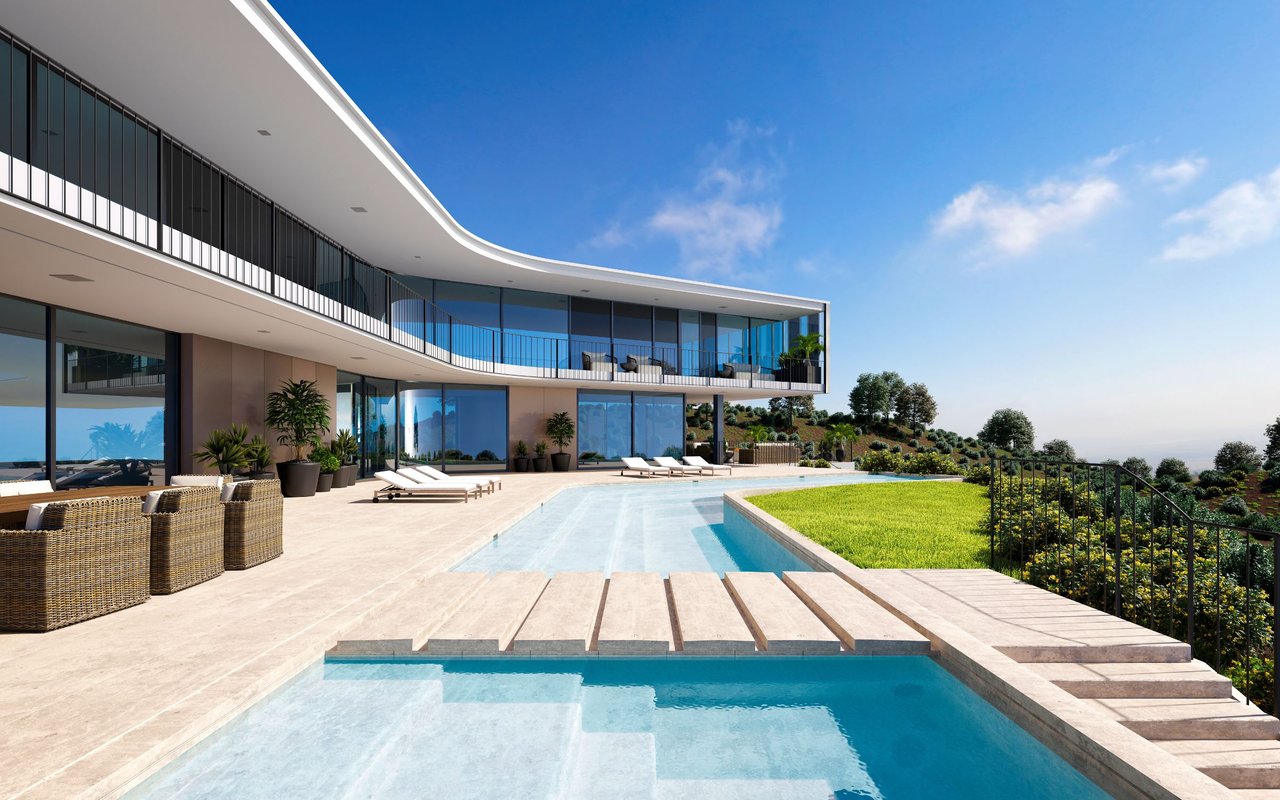
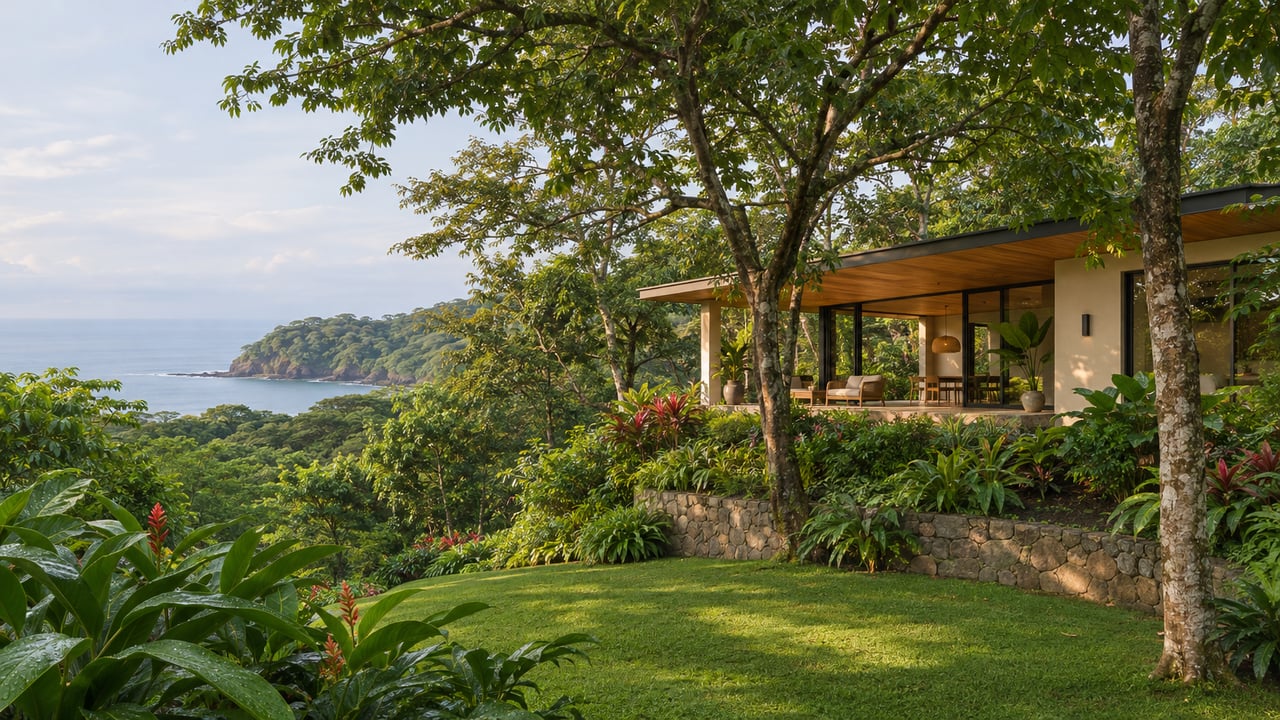
The Waldorf Astoria Residences Punta Cacique program includes 96 condominiums and 22 estate homes inside a resort. Its pools, landscaped grounds and shared structures are part of what buyers pay for, and under this law they also become part of each owner's taxable value. According to La Nación, the condominium administration supplies the figure for each owner's share of the common areas. Before closing, ask the administration for that figure. The deed proportion and the administration's number tell a buyer more about the future bill than the square footage of the unit does.
Holding the home through a company does not change any of this. La Nación reported that the tax applies to individuals and legal entities, including inactive corporations that own residential property. The law's only release from the filing duty covers owners of exempt properties, and it makes no exception based on nationality. The law also names concessionaires and permit holders as taxpayers. Hacienda's Sardinal district land-value matrix includes a separate ZMT Punta Cacique zone alongside the titled zones on the headland.
What is already fixed for 2027, and what arrives in December
The valuation inputs for the January 2027 bill have been published. Hacienda's resolution MH-DGT-RES-0031-2026, dated October 8, 2026 and published in La Gaceta on October 16, sets the valuation parameters for fiscal 2027, effective January 1, 2027. The cantons whose homogeneous-zone maps were revised are Tibás, Pérez Zeledón, San Mateo, Atenas, Flores, Bagaces, Cañas, Abangares, Tilarán and several in Puntarenas. Carrillo is not among them. Land around Punta Cacique will therefore still be valued with Hacienda's Carrillo map dated August 2025, whose Sardinal matrix lists Punta Cacique zones next to Playa Hermosa, Playa Panamá and Playas del Coco.
Construction values are also unchanged. Hacienda's update to the manual, published December 2, 2025, kept the 2023 values and only added new categories such as container buildings and treatment plants. The resolution notes that market indicators pointed to lower average construction values for several building types, which supported keeping the existing figures.
The exemption threshold and the brackets work differently. By law they are updated each December based on consumer price change for the 12 months ending November 30. The latest data comes from INEC's November 6 release, which put consumer price change at 0.55% for November 2025 through October 2026. That is a different window from the one the decree will use. Until the December decree is published, ₡143 million is the 2026 figure and should not be treated as the 2027 threshold.
The January sequence for a new owner
The current three-year declaration cycle began in 2025 and runs through 2027, according to La Nación. A buyer who closes mid-cycle does not have to wait for the next one. CRHoy reported last January that anyone who bought a qualifying home during 2025 had to file a sworn declaration through TRIBU-CR. The January 2026 dates set the pattern for a buyer who closes before year-end:
- January 1. Whoever owns the home that day is liable for the full fiscal year.
- By January 15. Hacienda's 2026 notice directed taxpayers to file Form D-174 in the OVi virtual office on TRIBU-CR and set January 15 as the deadline for filing and paying without surcharges.
- Payment. CRHoy reported that payment could be made with an IBAN account through the OVi or at any Banco de Costa Rica or BAC branch.
- Within the first 30 days of January. If the home is held in a company, the separate tax on legal entities falls in the same month.
CRHoy also reported that missing the deadline can bring fines, interest and legal restrictions. In the same article, the Colegio de Contadores Públicos advised owners building a home to keep records of construction costs, payments, contractors and municipal procedures, because those records can be useful with Hacienda or the municipality. For a Punta Cacique estate home under construction, that file will support the construction value the owner eventually declares. If a declared value is higher than the value Hacienda has on record, it replaces the record for that fiscal year.
This post is general information, not legal, tax or financial advice. Before acting, confirm how these rules apply to your property and ownership structure with a Costa Rican accountant or attorney.
If you are buying in Punta Cacique this season, ACT Costa Rica can help you collect the documents that show what you will owe, including the condominium deed proportion, the administration's common-area figure and the seller's payment history, and bring in the accountants and attorneys who handle the filing. Request a Private Consultation.